
Get Your Child Ready for an Earlier Start
When Malaysia announced plans to lower preschool entry to age five and adjust Standard One readiness by 20271, many parents had the same thought: Is my child ready?
Today, readiness feels more complex than before.
We are raising children in a digital world—one we are part of ourselves. Tablets, phones, and screens are everywhere. Sometimes, handing over a device feels like the easiest way to keep a child occupied while we manage everything else. And increasingly, even schools are incorporating digital tools into learning2.
Preparing our child for an earlier start is not about pushing them harder, it is about supporting them smarter. The question is no longer whether children will be exposed to screens, but how we help them to grow well in this environment. Real world experiences still matter. When children read, play, explore, and interact, their brains are actively working. These moments build language, creativity, and thinking skills. In contrast, too much passive screen time, especially without interaction, has been linked to shorter attention spans and slower language development3.
Balance is key - balancing screen time with real-life interaction, while supporting their eyes, brain, and body with the right nutrition to meet modern demands.
A child's brain develops rapidly in the first few years of life. By age five, about 90% of brain development is already formed. This is why young children are often called “little sponges.” They absorb everything they see, hear, and experience. Every interaction whether a conversation, a story, or even screen exposure, it all shapes how their brain is wired.
Brain development is a coordinated process4. It requires the right structural building blocks, regulators and daily support to help children learn and adapt effectively. DHA is one of the key building blocks of the brain and eyes. It supports learning, memory, and focus—helping children process information and adapt to new environments, especially as they start school earlier. Taurine plays an important role in both brain and eye development. It is concentrated in the retina, supporting how the eyes process visual information—an increasing demand in today's screen-focused world. Taurine also helps brain cells communicate efficiently, supporting learning and development. Taurine is naturally present in breast milk, while levels in cow's milk are lower, meaning intake may vary as children grow and transition in their diet.
Multivitamins provide daily support for a child's overall functioning. B vitamins help convert food into energy that keep the brain alert and focused especially during long school hours. Other essential nutrients support overall growth, immunity, and well-being, helping children stay active and engaged.
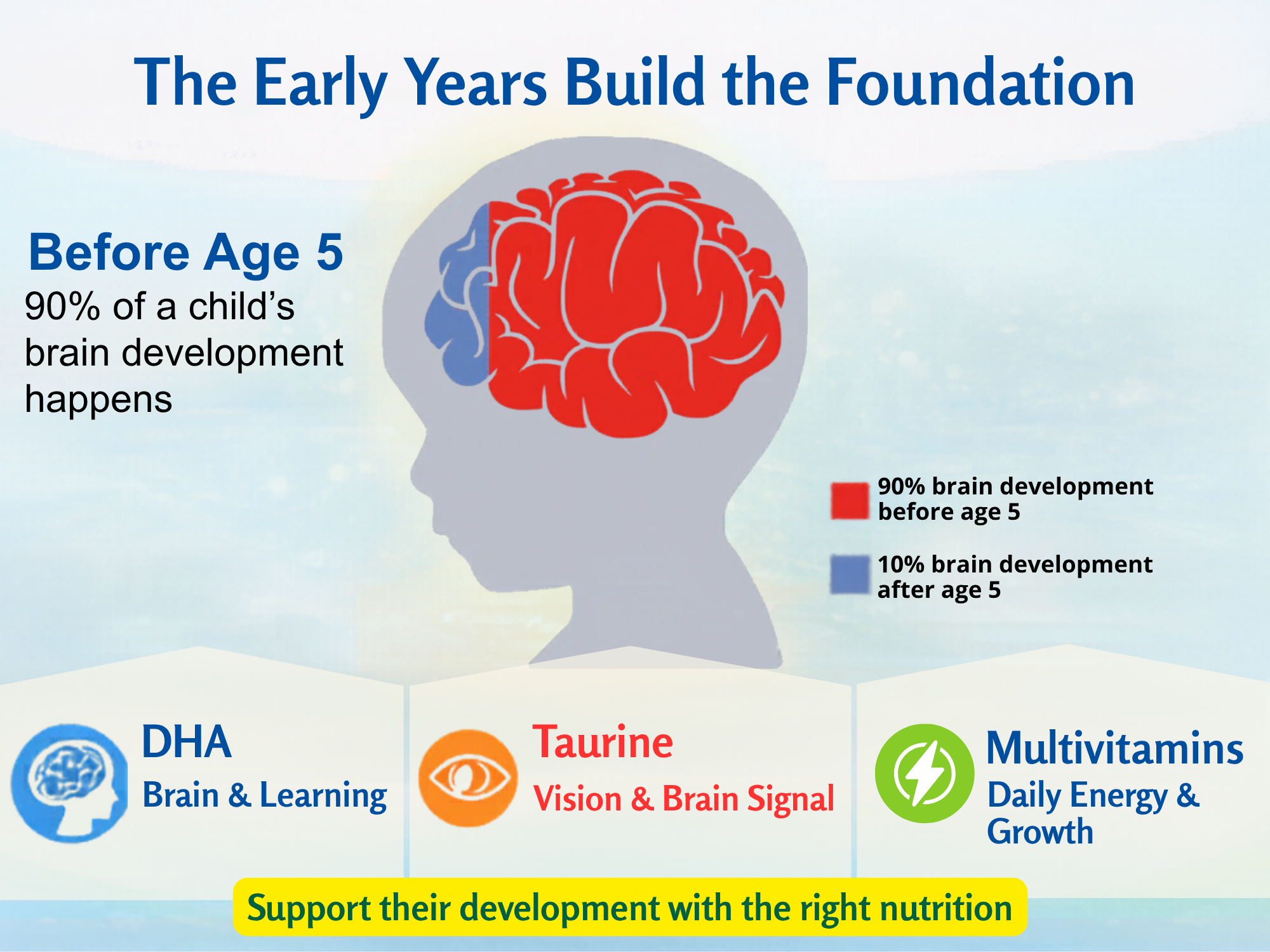
Together, these nutrients support how children think, see and stay ready to learn.
For parents looking to support your child's daily nutritional needs, Appeton Multivitamin Hi-Q Taurine with DHA Tablet brings together DHA, taurine, and essential vitamins in one simple routine—supporting focus, visual comfort, and learning readiness in today's screen-driven environment.
Because in a world that is moving earlier and faster, preparation does not start in the classroom. It starts with what we give them every day.

Learn more: APPETON MULTIVITAMIN HI-Q TAURINE WITH DHA TABLET
References:
- Malaysia lowers preschool entry to five, Standard One to six from 2027. (2026, January 20). Malay Mail. https://www.malaymail.com/news/malaysia/2026/01/20/malaysia-lowers-preschool-entry-to-five-standard-one-to-six-from-2027/206081
- Wire, W. N. (2026, January 18). New Digital Portal “PAJSK Malaysia” Launches to Simplify Co-Curriculum Assessment for Millions of Malaysian Students. Digitaljournal.com. https://www.digitaljournal.com/pr/news/winston-news-wire/new-digital-portal-pajsk-malaysia-170573266.html
- Karani, N. F., et al. (2022). The influence of screen time on children's language development: A scoping review. The South African journal of communication disorders, 69(1), e1–e7. https://doi.org/10.4102/sajcd.v69i1.825
- Cusick, S. E., & Georgieff, M. K. (2016). The Role of Nutrition in Brain Development: The Golden Opportunity of the "First 1000 Days". The Journal of pediatrics, 175, 16–21. https://doi.org/10.1016/j.jpeds.2016.05.013