Brain Fog? Maybe It’s Time to Talk About Blood Flow.
When you start forgetting little things, struggling to concentrate or feeling mentally sluggish, what’s the first thing you think of? Brain exercises? Omega-3 with EPA and DHA? More “brain food”? We naturally look for ways to keep our minds sharp because surely, if the problem is our memory, the answer must be to “feed the brain.”
But what if we’re looking at the wrong part of the picture?
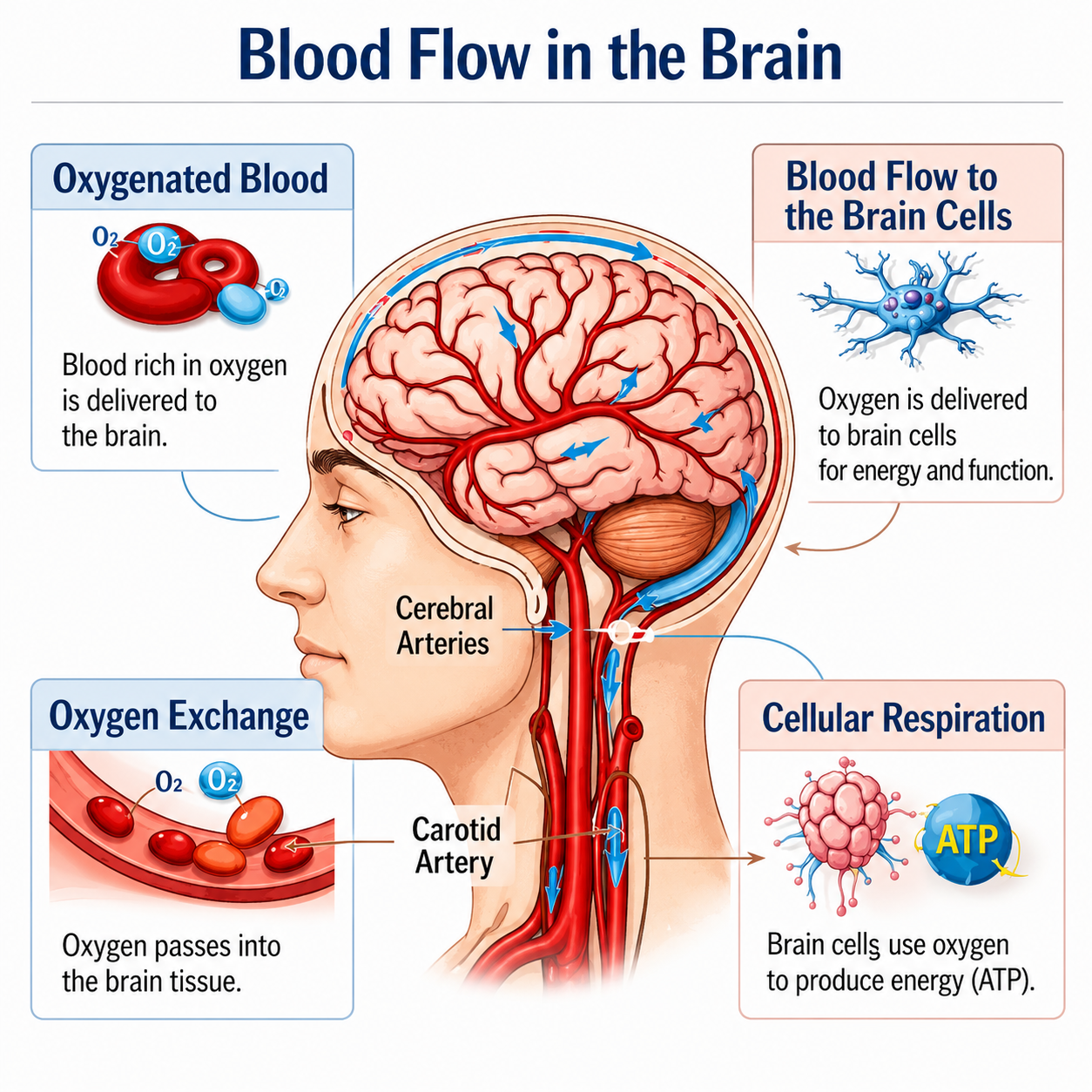
Your brain doesn’t work alone. It needs a constant supply of oxygen and glucose to support its energy-hungry cells and your bloodstream is the delivery system that gets them there. In fact, the brain makes up only around 2% of body weight, yet receives approximately 15–20% of cardiac output at rest. 1 Research also shows that brain activity and local blood flow are closely connected through a process known as neurovascular coupling. 2
Ever notice how you feel more awake and alert after a good walk or workout? There may be more going on than just getting your heart pumping. Exercise can influence blood flow to the brain, with a systematic review of 45 human intervention studies finding changes in regional cerebral blood flow following exercise training. 3 So that post-workout feeling of being more switched on? Your brain may be enjoying the benefits of getting your circulation moving too.
Think of it this way: your brain is the destination, but your blood vessels are the roads. You can have all the right “brain fuel,” but it still needs to be delivered. This is why scientists are increasingly interested in the relationship between vascular health, cerebral blood flow and brain function, particularly as we age. 2
So, where does Ginkgo Biloba come in? This ancient botanical has been extensively studied for its potential effects on circulation and vascular function. A meta-analysis of 18 randomized controlled trials involving 1,985 adults found that standardized Ginkgo biloba extract was associated with a reduction in blood viscosity, which the researchers interpreted as evidence consistent with improved blood perfusion. 4
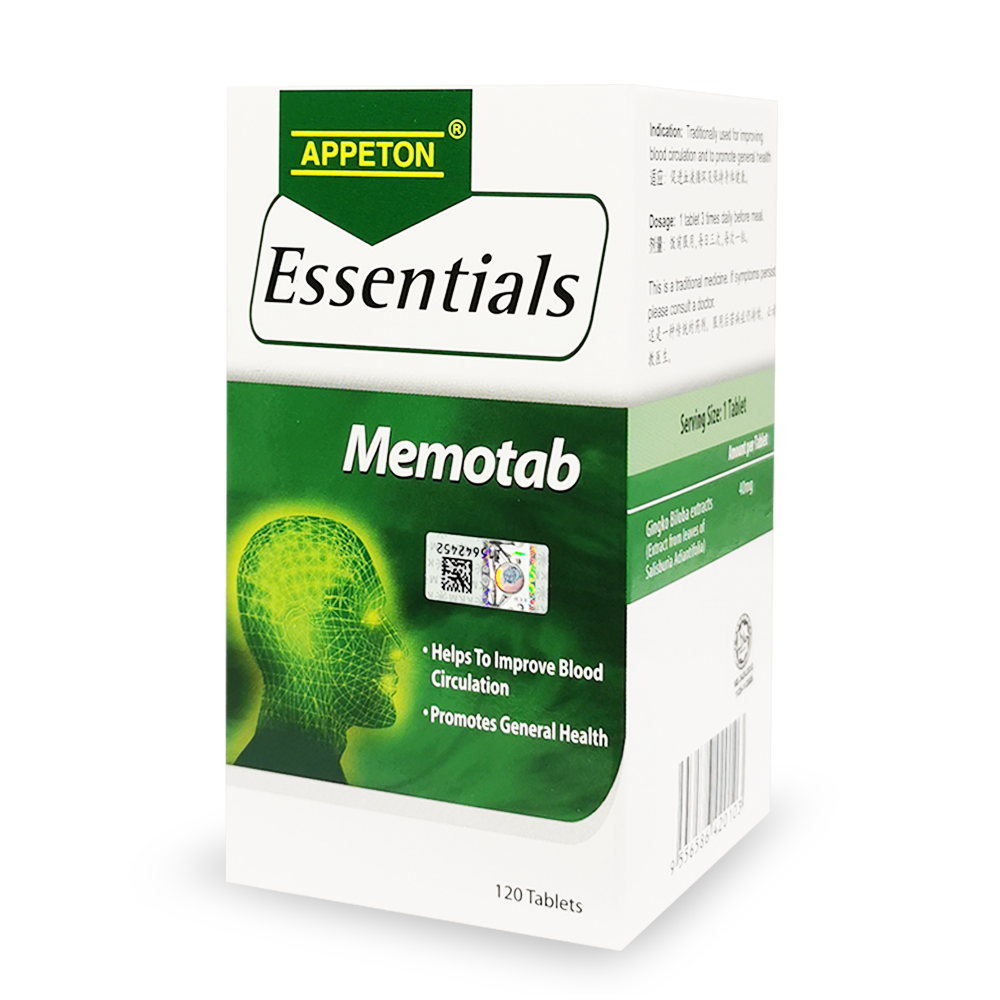
That’s the thinking behind Appeton Essentials Memotab. Each tablet contains 40 mg of standardized Ginkgo Biloba Extract, formulated to help improve blood circulation and promote general health. Alongside healthy habits such as regular movement, a balanced diet and sufficient sleep, supporting healthy circulation can be another piece of the bigger picture of brain and overall wellbeing.
So next time you feel a little foggy, think beyond the brain. It’s not just about the fuel, it’s about the flow.
Learn more: APPETON ESSENTIALS MEMOTAB
References
- Xing, C. Y., Tarumi, T., Liu, J., Zhang, Y., Turner, M., Riley, J., Duron Tinajero, C., Yuan, L.-J., & Zhang, R. (2017). Distribution of cardiac output to the brain across the adult lifespan. Journal of Cerebral Blood Flow & Metabolism, 37(8), 2848–2856. https://doi.org/10.1177/0271678X16676826
- Phillips, A. A., Chan, F. H. N., Zheng, M. M. Z., Krassioukov, A. V., & Ainslie, P. N. (2016). Neurovascular coupling in humans: Physiology, methodological advances and clinical implications. Journal of Cerebral Blood Flow & Metabolism, 36(4), 647–664. https://doi.org/10.1177/0271678X15617954
- Kleinloog, J. P. D., Nijssen, K. M. R., Mensink, R. P., & Joris, P. J. (2023). Effects of physical exercise training on cerebral blood flow measurements: A systematic review of human intervention studies. International Journal of Sport Nutrition and Exercise Metabolism, 33(1), 47–59. https://doi.org/10.1123/ijsnem.2022-0085
- Kellermann, A. J., & Kloft, C. (2011). Is there a risk of bleeding associated with standardized Ginkgo biloba extract therapy? A systematic review and meta-analysis. Pharmacotherapy, 31(5), 490–502. https://doi.org/10.1592/phco.31.5.490